MANMADE LAND
EVER SINCE MAN BECAME HOMO SAPIENS WE HAVE MANIPULATED AND UNDULATED THE WORLD WE LIVE IN
BY HANS STRAND
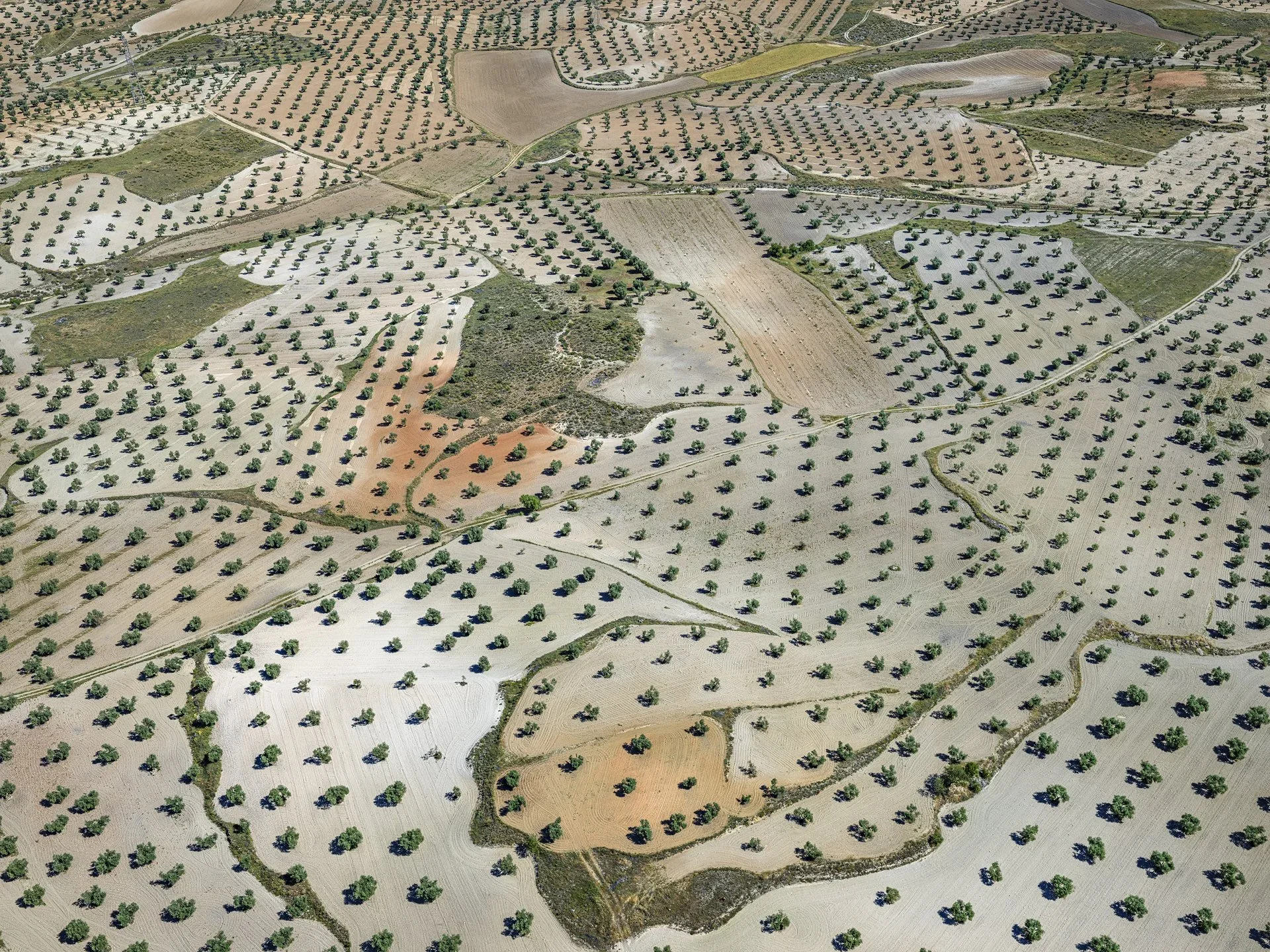
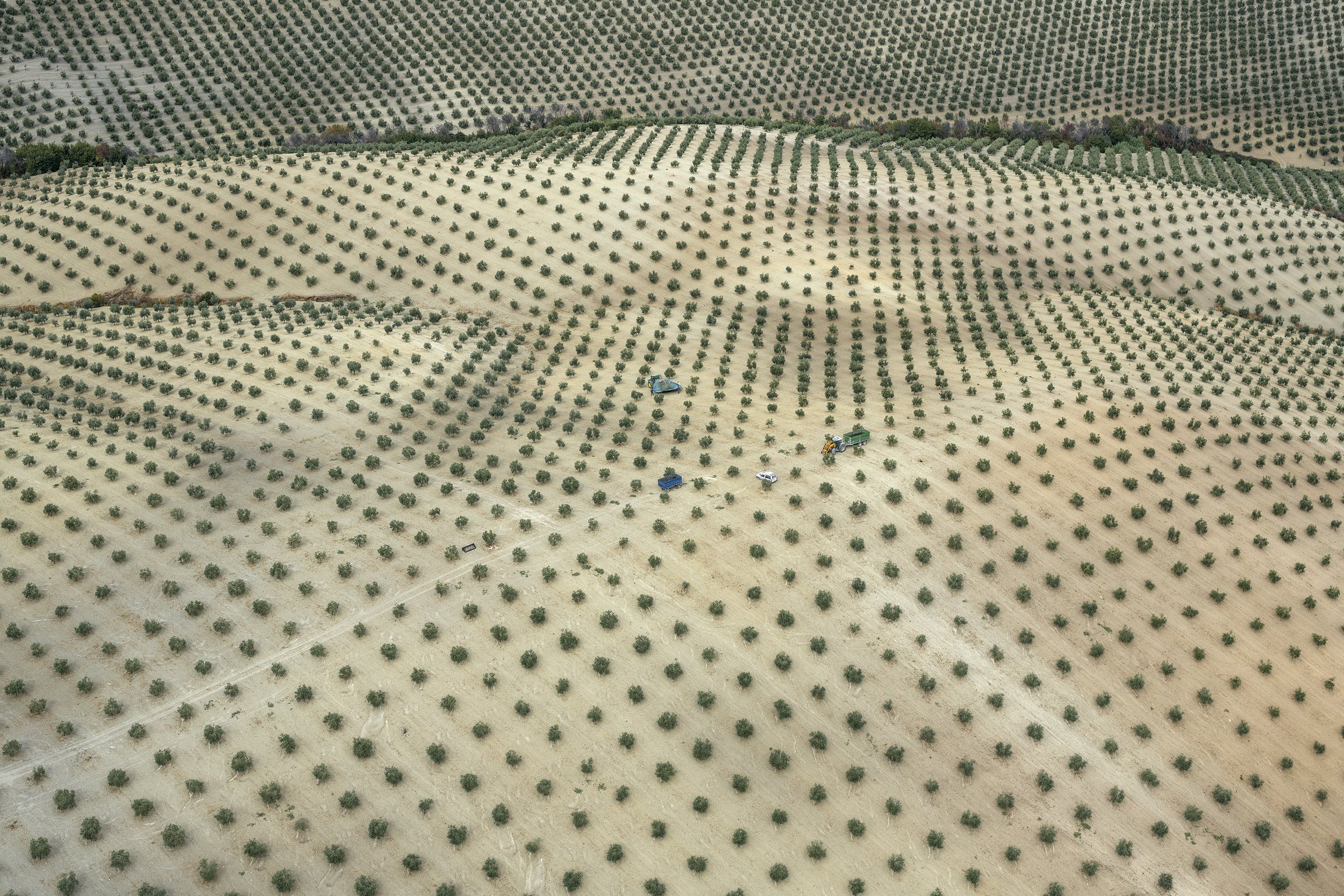
The big changes came with the development of agriculture some 7000 years ago. The land around the Mediterranean Sea got deforested by man and great erosion problems started as an immediate consequence. The fertile soil was flushed away by rains and left was just bare rock. In Spain there was still soil enough, which could be used for farming. The problem here was the lack of water in the dry climate. To use the land in the best way, farmers started to grow the crops during the winter season, this when the precipitation was enough the make the crops grow. They then harvested in the spring before the soil got too dry from the summer heat. In many areas of Spain this way of dryland farming is still practiced.
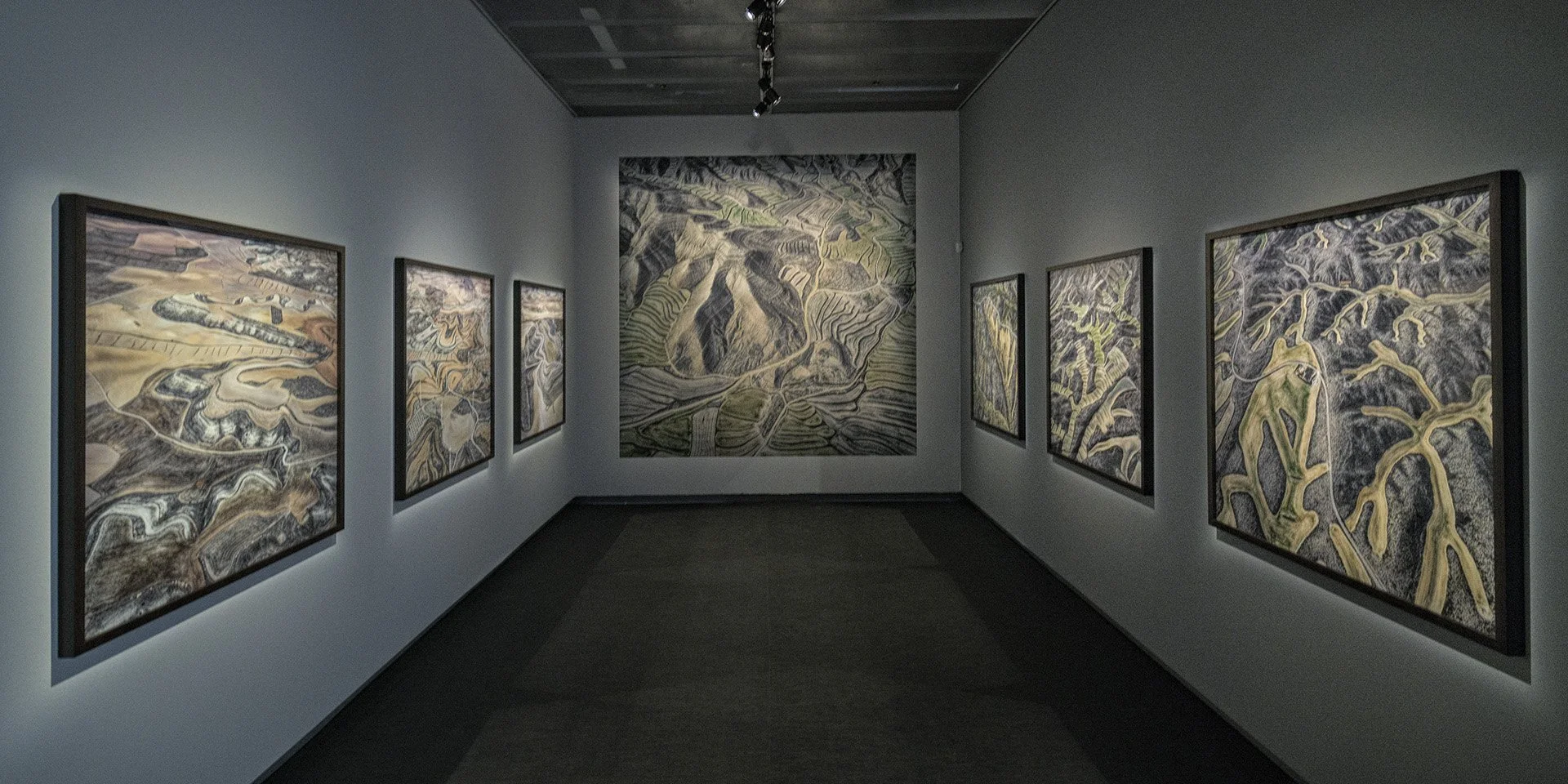
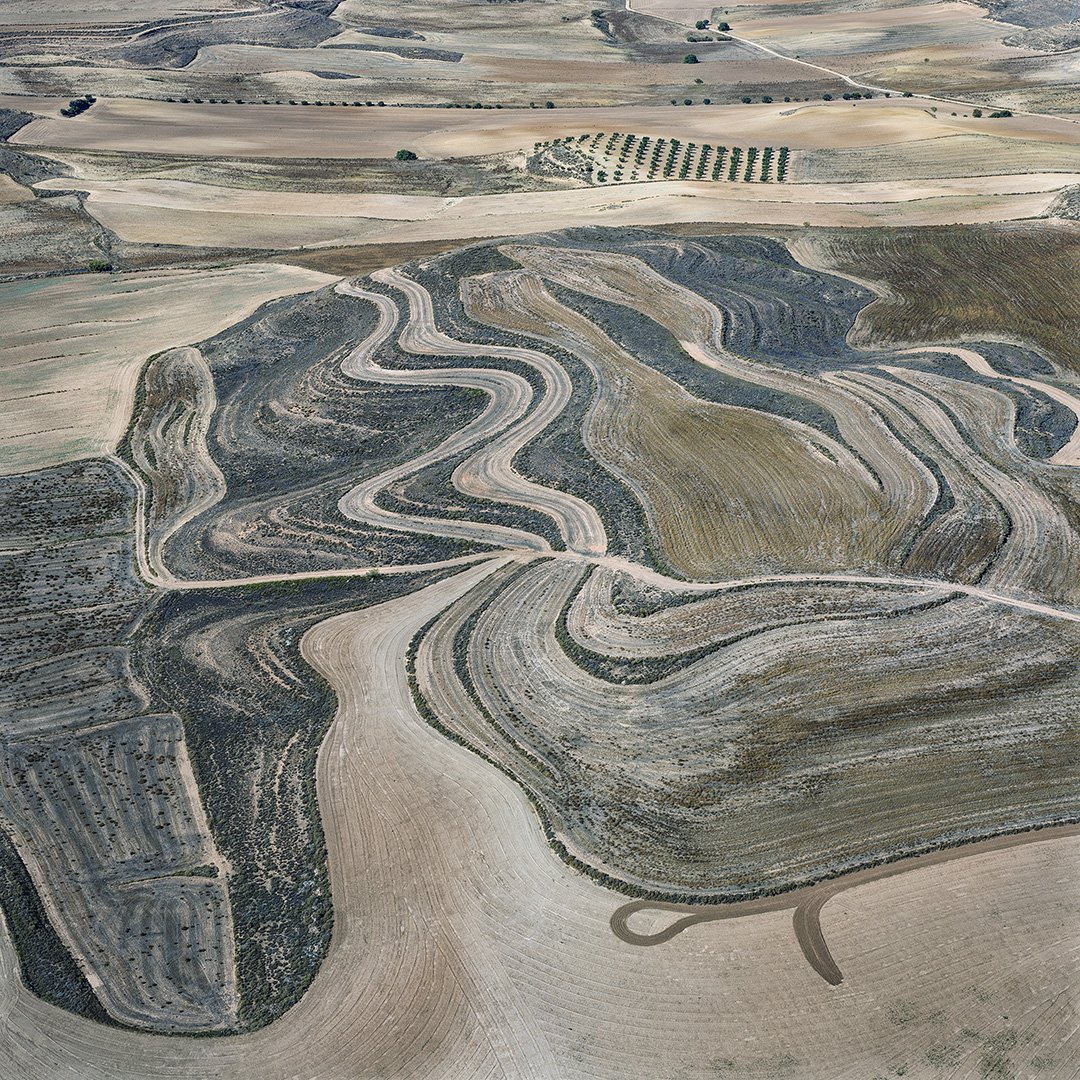
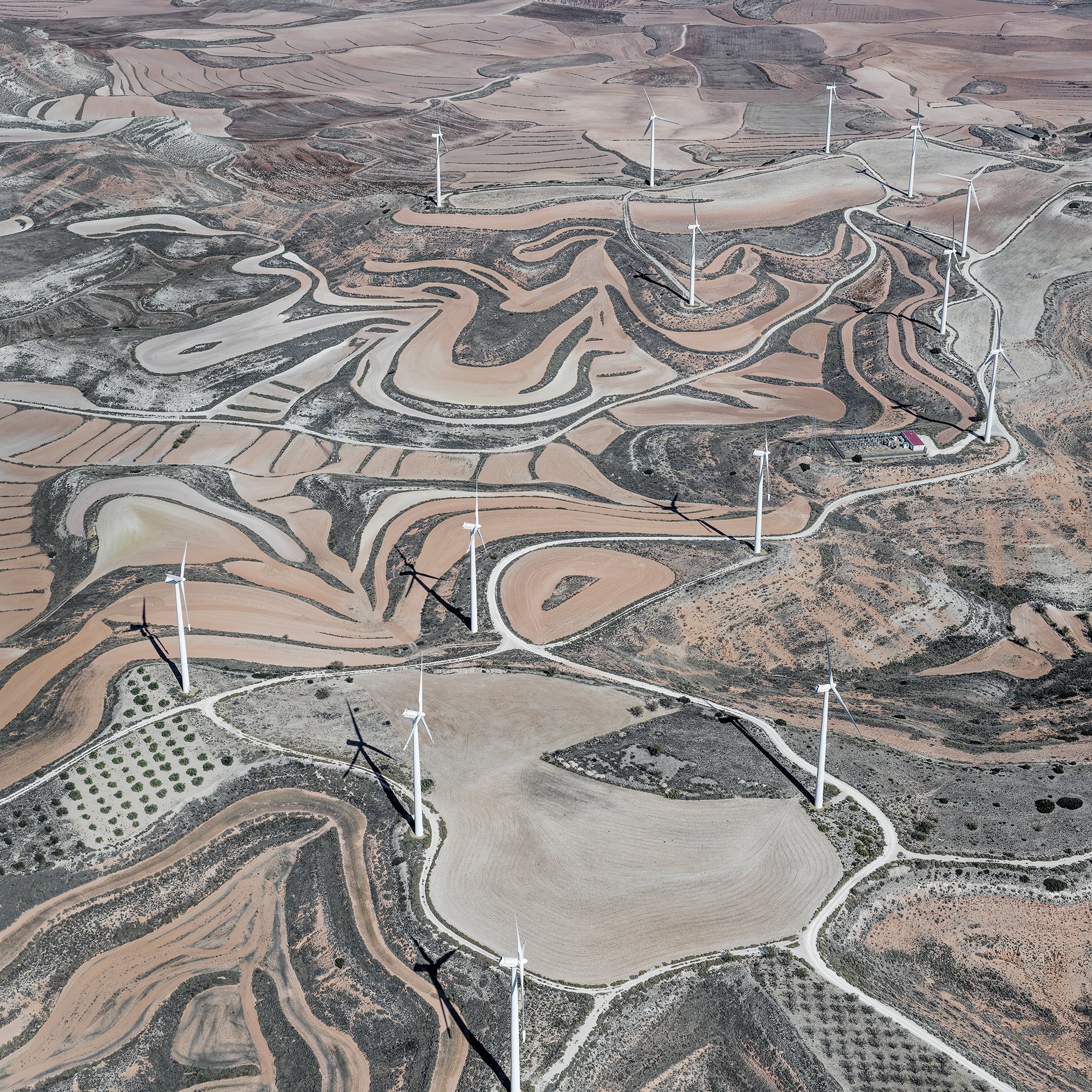
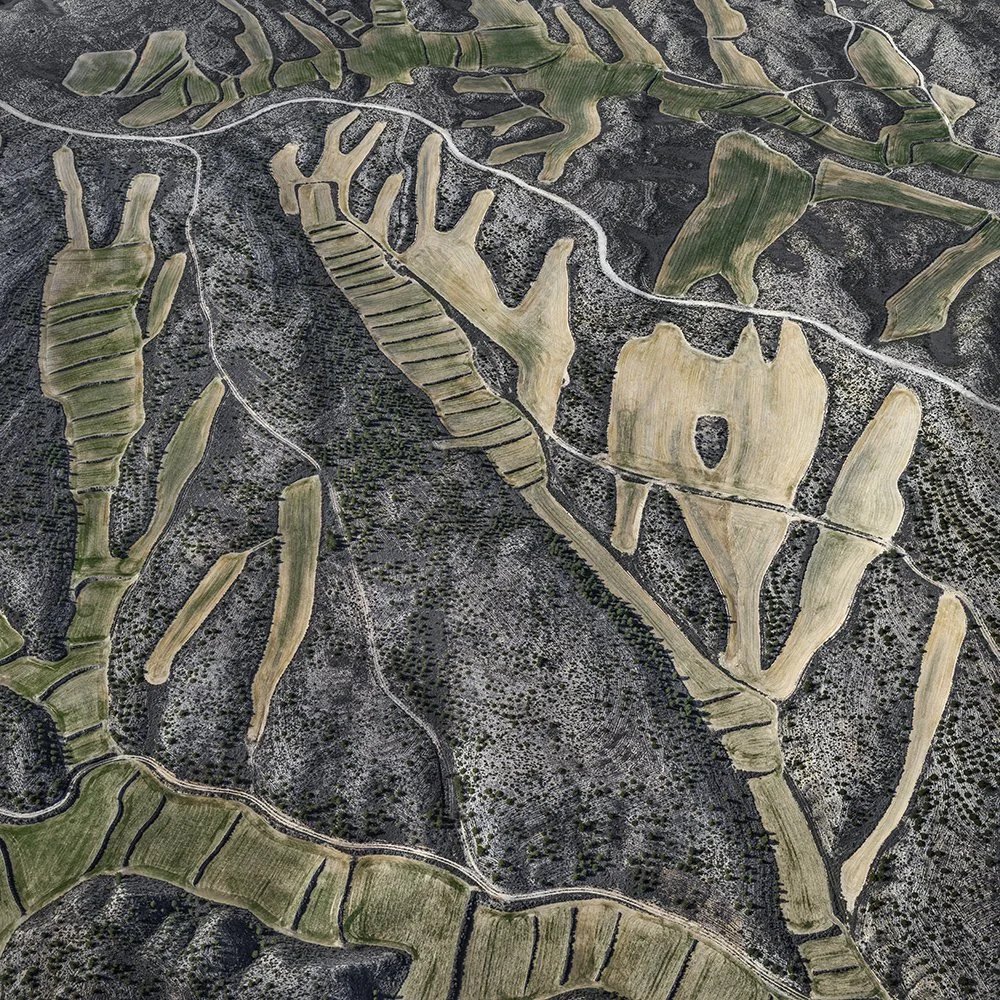
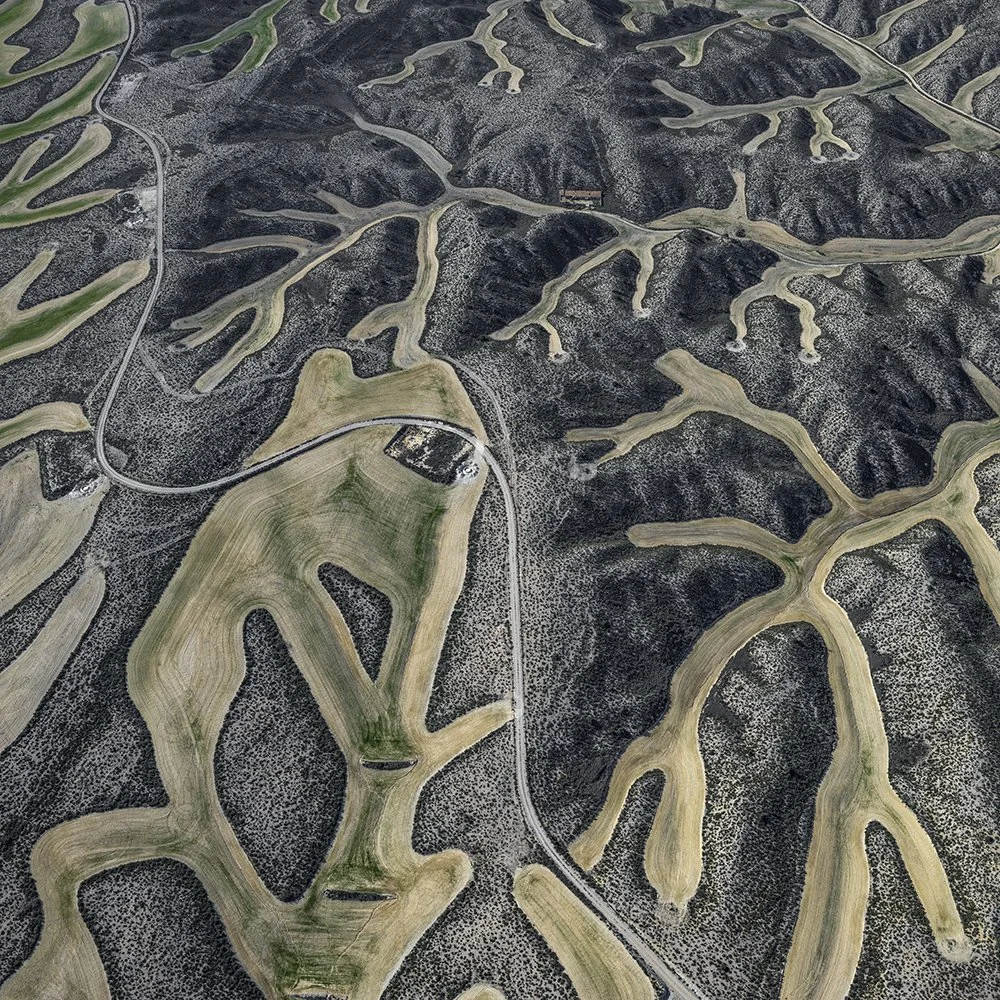
It is a sustainable method, since no irrigation is used. Still the land is more or less completely consumed for farming. Specially in the provinces of Andalusia and Aragon there is almost not a single square meter which is not tamed and undulated by man and used for farming. This has resulted in huge monocultures. The diversity of plants which once grew here is erased and gone forever. From the air this land look both scary and fantastic at the same time. From an artistic point of view it is specially unique. The farm fields have taken on incredible shapes and patterns and you can easily make parallels to expressionistic art. The farmers, of course had no aesthetic intentions when they reshaped the land. The shapes of the fields are just results of the topography and the farming technics.
-
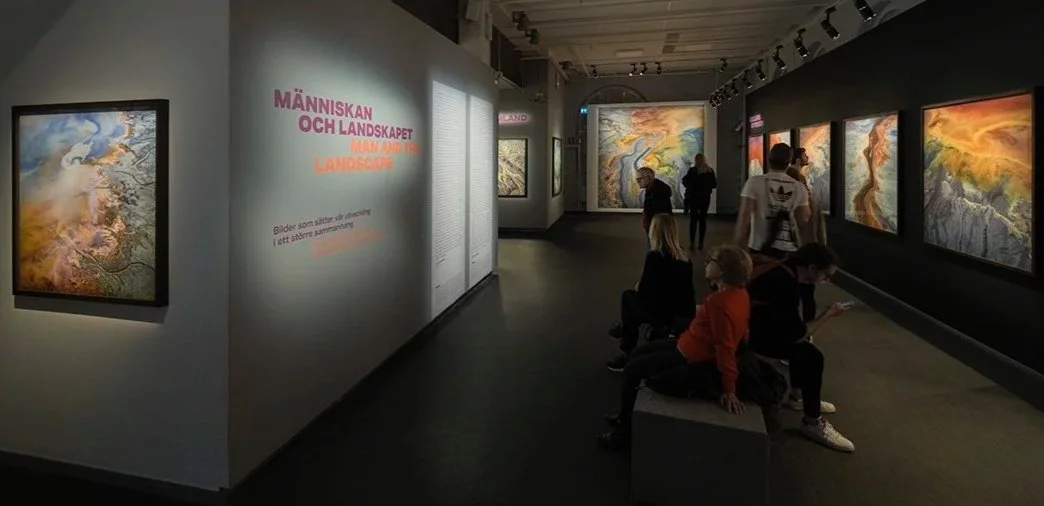
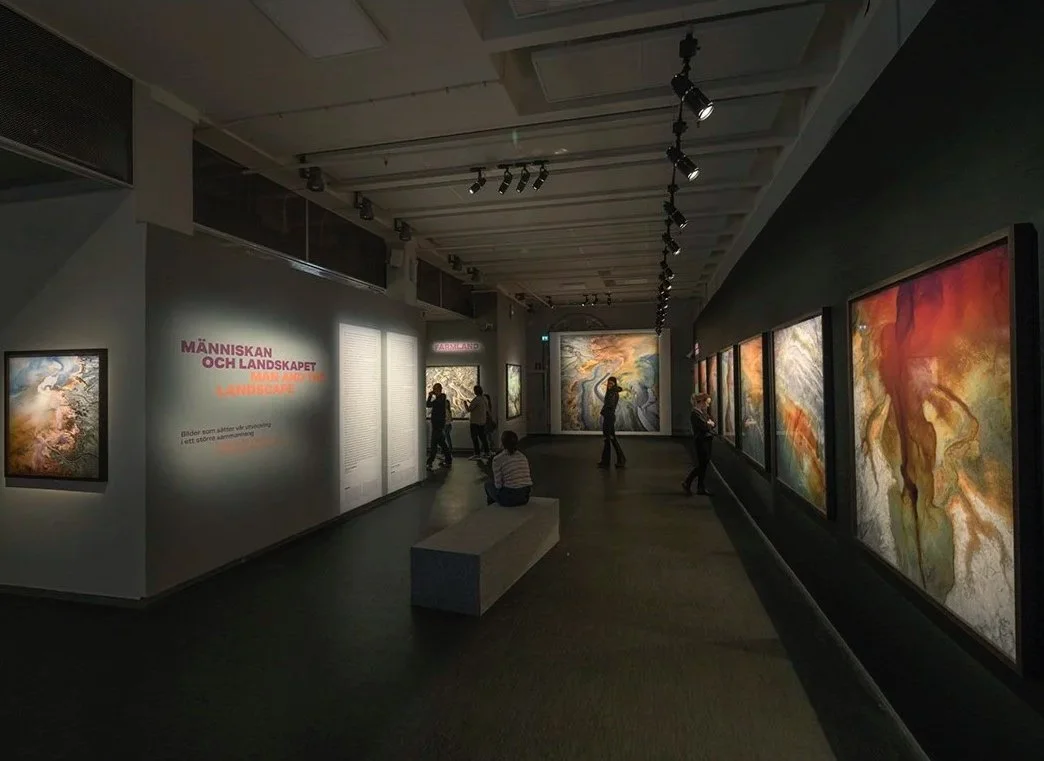
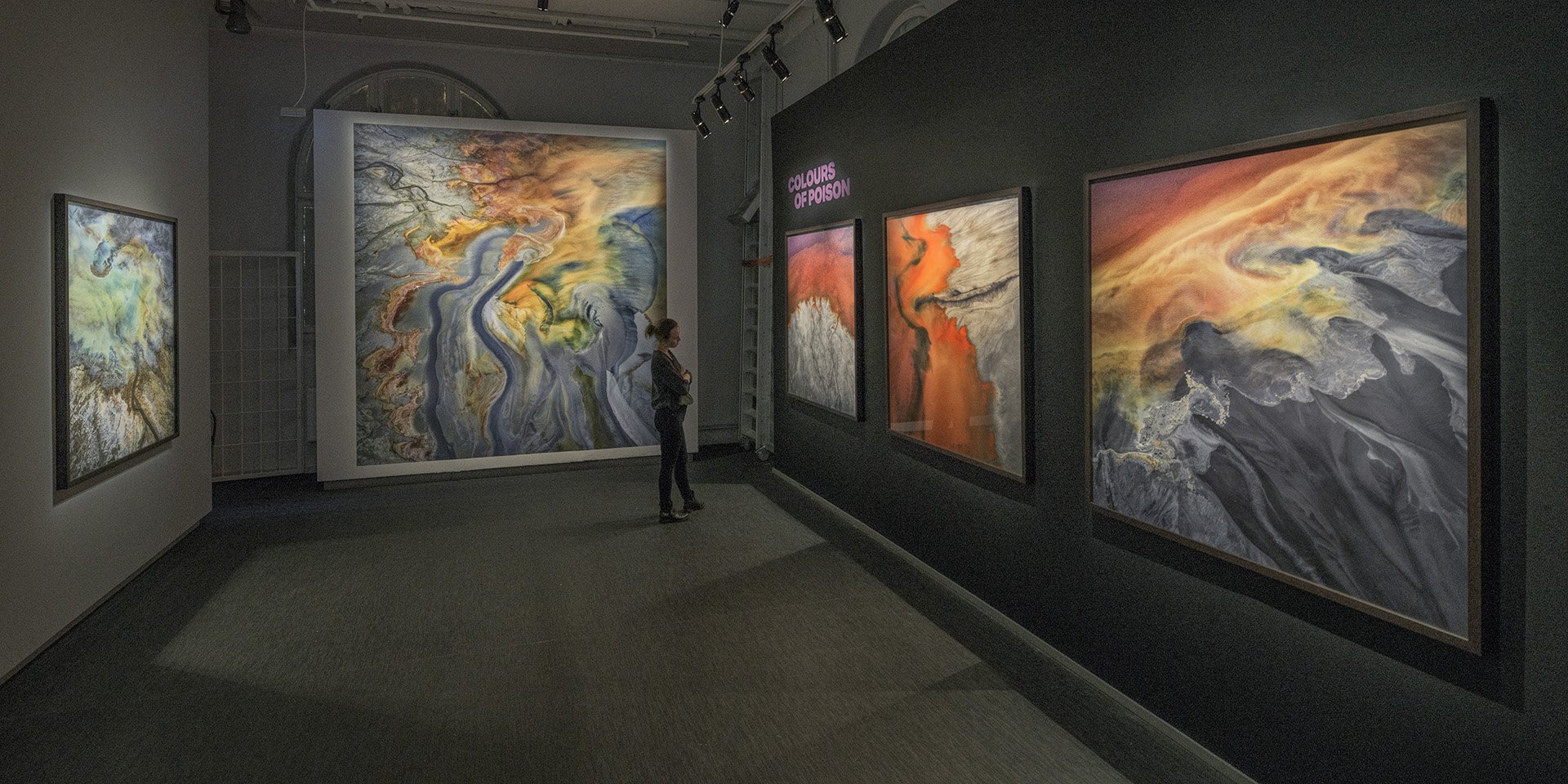
The exhibition consists of 20 works, Soundscapes and interviews. Hans is a good speaker and are available for talks.
Every picture is framed with museum glas with a dark brow frame.
-
This exhibition is available to show. Please contact us for more information.
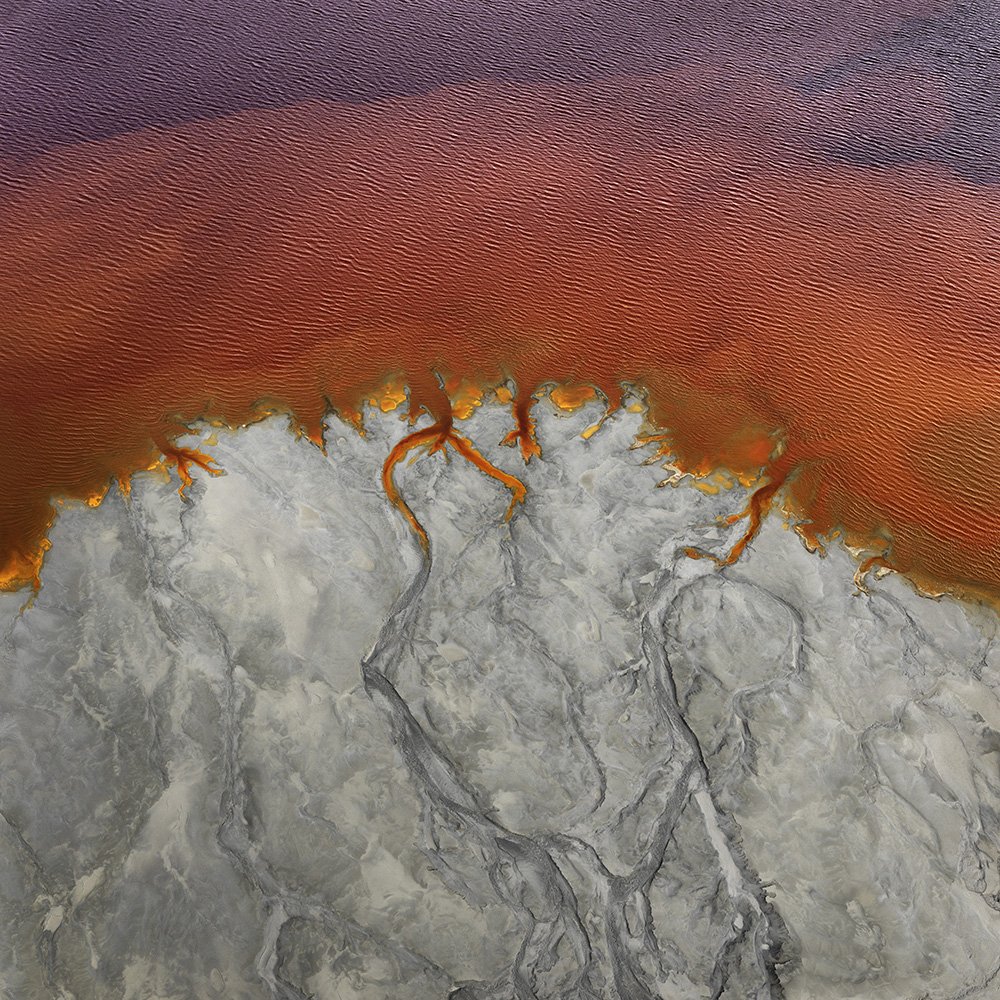
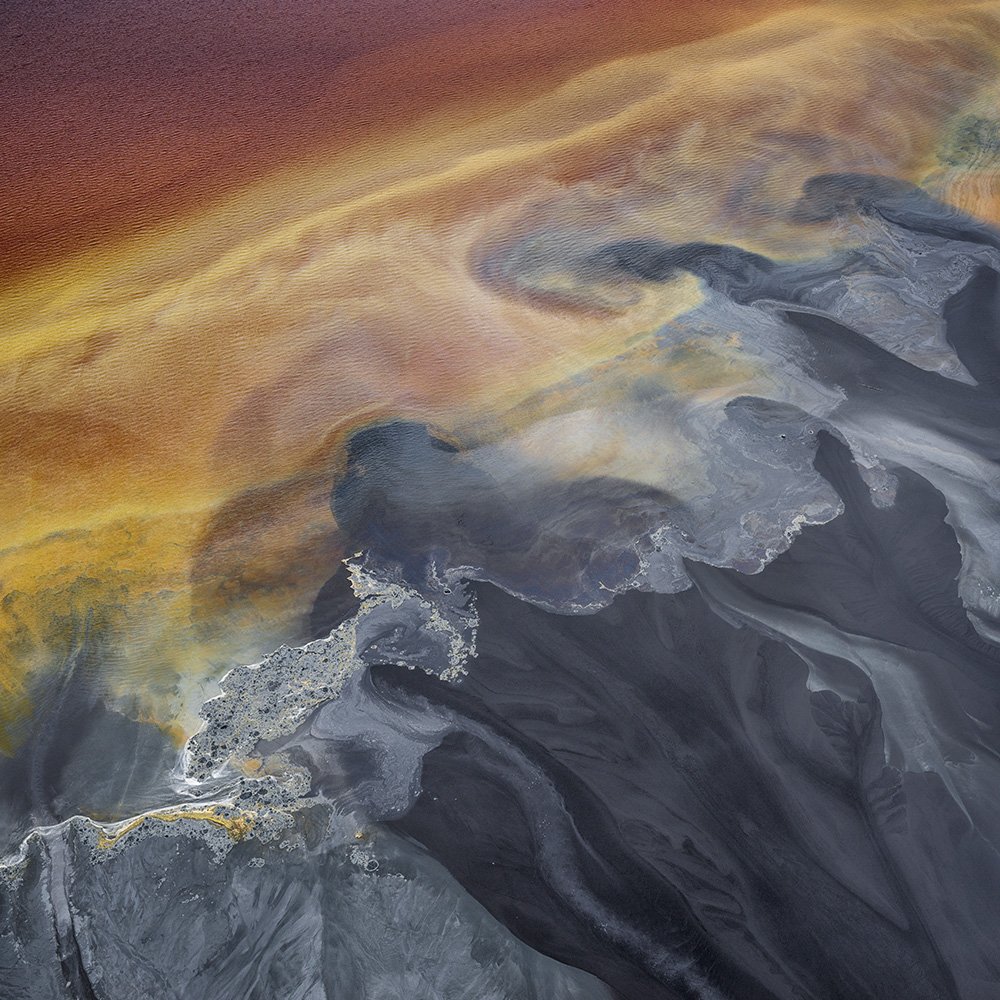
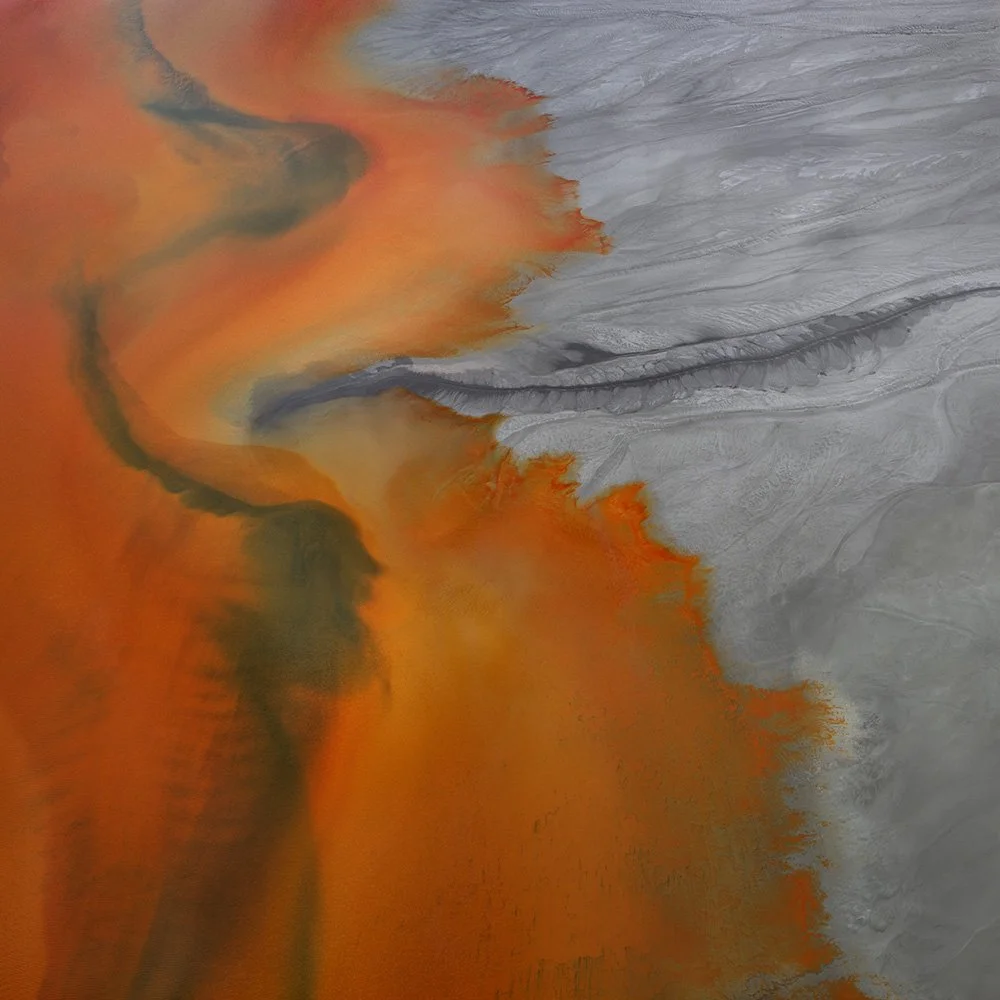
The exhibition features large artworks framed in dark brown. The accompanying information is presented in large, easy-to-read text, displayed prominently in a central location within the exhibition space